Ozonated Oils in Skincare: Why We Use Ozonated Macadamia Oil
Ozonated oils are plant oils that have been slowly infused with ozone, an energised form of oxygen. The ozone doesn't float freely in the oil. It bonds into the oil's structure and stays held there until the warmth and moisture of your skin begin to release it.
In this piece we explore what ozonated oils are, how they relate to oxygen and the skin, and why ozonated macadamia oil sits at the heart of our Sacred Serum.
In short
Ozonated oils hold oxygen within the oil itself. On the skin, that stored oxygen is released slowly, as small signals rather than all at once. Macadamia is a beautiful oil to carry it: it's rich in palmitoleic acid, a fatty acid closely related to one our own skin makes in abundance when we're young.
What Is Ozonated Oil?
Ozone (O₃) is oxygen with one extra atom. You've likely smelt it after a summer storm: that clean, electric freshness in the air. In nature it forms when lightning or sunlight energises the ordinary oxygen (O₂) we breathe.
To make an ozonated oil, a gentle stream of oxygen and ozone is bubbled through a plant oil over many hours. The ozone reacts with the oil, and something new is formed.
This isn't a new idea. People have been ozonating oils since the late 1800s, and ozonated olive and sunflower oils have been studied in dermatology for decades.

How Does Ozone Become Part of an Oil?
Plant oils are made largely of fatty acids. Many of these contain what chemists call double bonds: points along the molecule holding a little spare energy, where a reaction can take place.
When ozone meets one of these double bonds, it attaches, rearranges and settles into a new, stable ring called an ozonide. Alongside it form other oxygen-rich compounds known as peroxides. The chemist Rudolf Criegee described this sequence in the mid-twentieth century, and it still carries his name.
The result is an oil holding a reservoir of what researchers call "active oxygen", resting quietly in place until it meets the skin.
From oxygen to oil to skin
01
Energised
Oxygen (O₂) is energised into ozone (O₃), much as lightning energises the air.
02
Held
Ozone bonds to the oil's double bonds, forming stable ozonides and peroxides.
03
Released
The warmth and moisture of your skin slowly release small oxygen signals.
How much active oxygen an oil holds is measured by its peroxide value. More isn't better. Research suggests a moderate degree of ozonation sits more comfortably on skin than an oil that has been pushed too far, which is why careful ozonation matters as much as the oil itself.
Ozonated Oil, Oxygen and the Skin: How It Works
Here's something many people don't realise: the outer layers of your skin take much of their oxygen straight from the air. Researchers in Germany found that the atmosphere supplies roughly the top quarter to almost half a millimetre of skin, including the whole living epidermis. In a small but real way, your skin breathes.
It's tempting to say ozonated oils "deliver oxygen" to the skin, and you'll see that phrase often. The reality is subtler, and more interesting.
When ozonated oil meets the warmth and natural moisture of the skin, its ozonides gradually break down. As they do, they release tiny amounts of reactive oxygen compounds. These aren't there to flood the skin with oxygen. They behave more like messengers.
Our skin already speaks this language. It uses oxygen-based signals constantly, and in small, measured amounts they prompt its own protective systems, including its antioxidant defences, to respond. It's a pattern seen throughout nature, sometimes called hormesis: a gentle challenge that invites a stronger, more resilient response. Research into how this plays out in skin is still unfolding, and we share it with curiosity.
This is why the slow release matters. Ozone on its own is far too reactive for skin. Held within an oil, it becomes something the skin can receive gradually, on its own terms.
Oxygen, held in the oil.
Released on the skin's own terms.
Why Ozonated Macadamia Oil?
Most research on ozonated oils has used olive or sunflower oil. We chose macadamia, for reasons that run deeper than its local roots.
Macadamia is a native Australian tree, first found in the subtropical rainforests of south-east Queensland and northern New South Wales, not far from where we make Sacred Serum by hand.
~80%
monounsaturated fats
16–22%
palmitoleic acid (omega-7)
Native
to south-east Queensland
Rich in palmitoleic acid
Macadamia holds more palmitoleic acid (omega-7) than almost any other plant oil. The skin's own oils are rich in a very close relative of this fatty acid when we're young, and the levels fall as we age. It's part of why macadamia feels so familiar on the skin: soft, quickly absorbed, never heavy.
Steady and gentle by nature
Macadamia is mostly monounsaturated, meaning most of its fatty acids carry a single double bond. That gives ozone fewer places to react than in oils rich in polyunsaturated fats, and gives the oil natural resistance to turning rancid. It makes a calm, steady carrier for active oxygen.
Nourishing in its own right
Even before ozonation, macadamia is a deeply nourishing oil, long used for dry and mature skin. Ozonation adds a new dimension without losing what made it beautiful to begin with.

Ozonated Macadamia in Our Sacred Serum
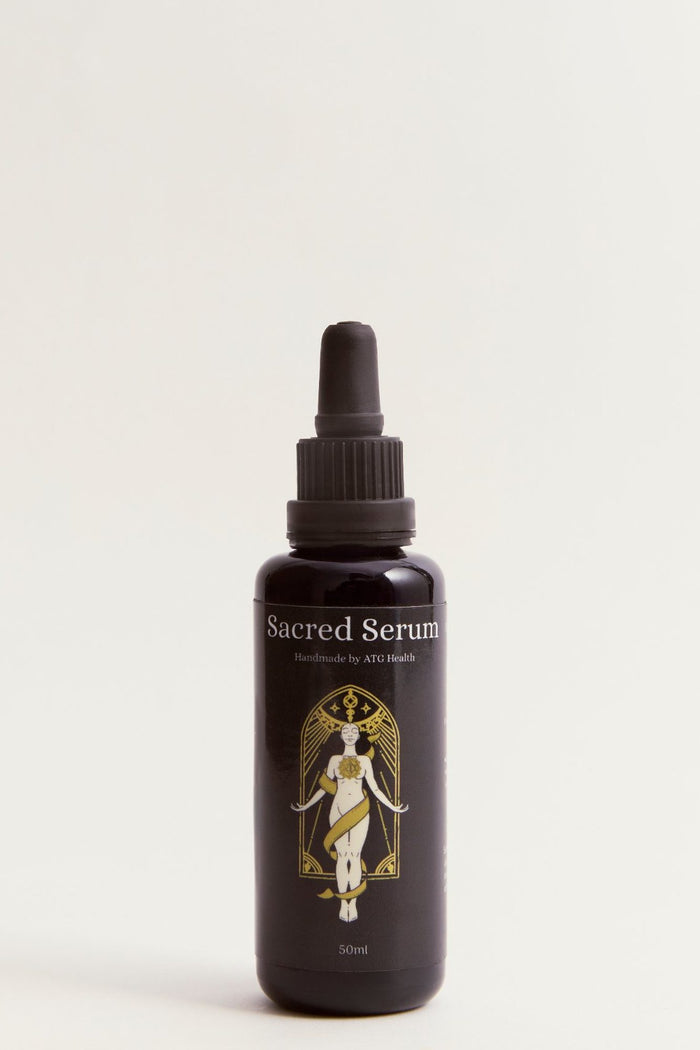
Sacred Serum is a face and body oil built on Australian native botanicals. Ozonated macadamia is its second ingredient, carried alongside jojoba, which closely resembles the skin's own oils.
Around them sit Kakadu plum and raspberry extract, Australian native sandalwood, blue cypress, wild-crafted rose mahogany and Carbon 60.
We think of it as a conversation. Ozonated macadamia brings gentle oxygen signals; Kakadu plum and Carbon 60 bring antioxidant support. Stimulus and protection, held in the same bottle, the way nature tends to keep things in balance.

Featured in this story
Sacred Serum
Botanical nourishment in its most concentrated form. Ozonated macadamia and jojoba with Australian native botanicals and Carbon 60, for face, body, hair and scalp.
How to Use Ozonated Oil in Your Skincare Routine
- Face and neck: warm 3–4 drops of Sacred Serum between your palms and press gently into clean skin, morning or night.
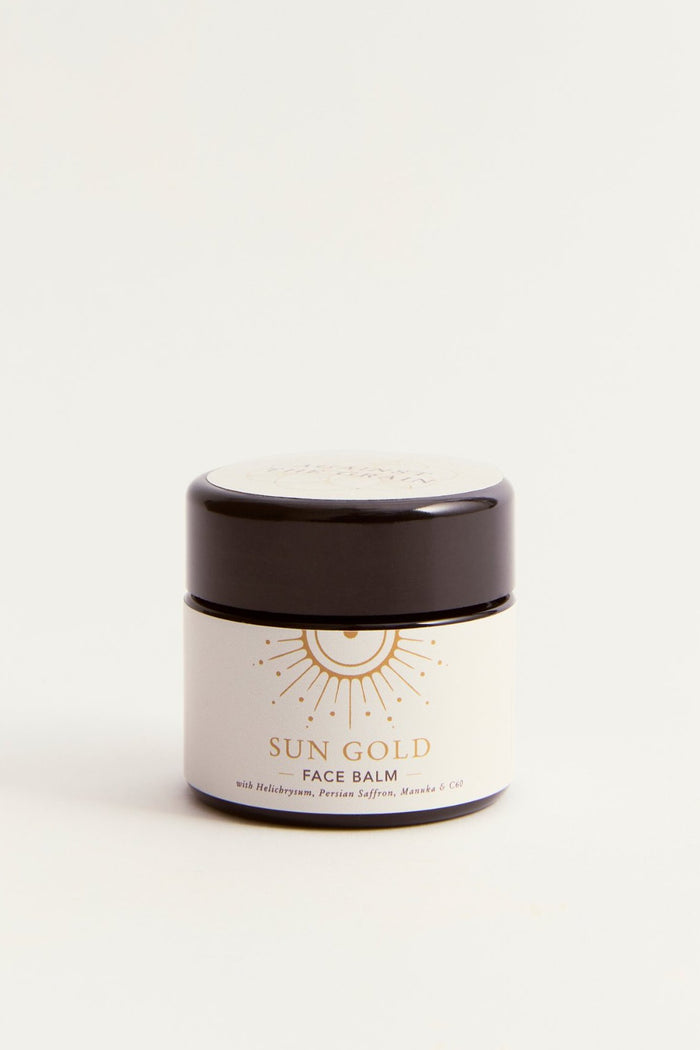
- Beneath a balm: for richer nourishment, layer it under Sun Gold, our golden face balm.
- Body, hair and scalp: massage into dry areas, the ends of the hair or the scalp.
- Slow it down: pair it with a gua sha or a few unhurried breaths. The ritual is part of the nourishment.
Ozonated oils carry a faint, fresh aroma of their own; in Sacred Serum it sits beneath the scent of sandalwood and the forest. Store your oil somewhere cool and away from direct sun, and if your skin is sensitive, try a little on the inner arm first.
What to Look for in an Ozonated Oil
A clearly named base oil
Ozonated oil is only as good as the oil it begins with. Look for a named, good-quality plant oil rather than a vague "ozonated oil".
Gentle, moderate ozonation
Heavily ozonated oils can become thick, sharp-smelling and harder on the skin. A moderate level, carried in a considered formulation, is kinder.
A formulation, not just an ingredient
Ozonated oil works beautifully alongside other botanicals. Balanced with nourishing carriers and antioxidants, it becomes part of a whole rather than a single, isolated active.
Final Thoughts
Ozonated oils sit where chemistry and nature meet: oxygen energised the way lightning energises the air, then held within a plant oil until the skin is ready to receive it.
For us, ozonated macadamia is a quiet expression of how we like to formulate. Native, nourishing, and working with the skin's own intelligence rather than over it.
If you'd like to know more, or aren't sure whether Sacred Serum suits your skin, get in touch with us. We're always happy to talk.
Frequently Asked Questions
What is ozonated oil?
Ozonated oil is a plant oil, such as olive, sunflower or macadamia, that has had ozone gas bubbled through it. The ozone bonds to the oil's fatty acids, forming stable compounds called ozonides that hold "active oxygen" within the oil.
Does ozonated oil put oxygen into the skin?
Not in the way the phrase suggests. Your outer skin already draws much of its oxygen from the air. Ozonated oil instead releases small amounts of reactive oxygen compounds as it meets the skin's warmth and moisture, and these act more like signals than a supply of oxygen.
What is ozonated macadamia oil?
It's macadamia nut oil that has been ozonated. Macadamia is native to south-east Queensland and is naturally rich in palmitoleic acid (omega-7) and monounsaturated fats, which makes it a soft, stable and skin-friendly base for ozonation.
Is ozonated oil suitable for sensitive skin?
Gently ozonated oils in a balanced formulation are generally well tolerated, but every person's skin is different. If your skin is sensitive, patch test on the inner arm before using on the face.
How do you use an ozonated face oil?
Warm a few drops between your palms and press into clean skin, morning or night. It can be worn alone or layered beneath a balm.
Why does ozonated oil smell different?
Ozonation creates new compounds in the oil, which give it a light, fresh scent of its own. In a finished formulation like Sacred Serum it's softened by the botanicals around it.
Further reading
- Travagli et al. (2010). Ozone and ozonated oils in skin diseases: a review. Mediators of Inflammation.
- Ugazio et al. (2020). Ozonated oils as antimicrobial systems in topical applications. Molecules.
- Stücker et al. (2002). The cutaneous uptake of atmospheric oxygen contributes significantly to the oxygen supply of human dermis and epidermis. Journal of Physiology.
Against The Grain
Handmade on the Sunshine Coast.
Before You Go…
Here are a few handpicked articles to inspire your next self-care moment.