Tallow vs Plant Oils: Provenance and Lipid Architecture
Tallow has earned its place in natural skincare. It's a traditional, nourishing fat, and plenty of people love it. We have nothing against tallow. We've simply chosen a different path: a blend of cold-pressed plant oils whose story we can trace from the soil to your skin, each one bringing something the others can't.
In this piece we look at the questions worth asking of any fat you put on your skin, what we mean by lipid architecture, and how that thinking shapes our Sun Gold, Sacred Serum, Healers' Balms and Zinc Balms.
In short
Tallow isn't better or worse than plant oils. Any fat is only as good as where it came from and how it was made. We choose plant oils because we can follow their trail, grower by grower and batch by batch, and because blending several oils gives the skin a broader spectrum of fatty acids and botanical compounds than any single fat can.
Do You Know Where Your Skincare Comes From?
Not the brand. The source.
Most of us read a label for what's in a product. Far fewer of us ask where those ingredients began: the land they grew on, what they were fed or sprayed with, and what happened to them before they reached the jar.
Your skin is your largest organ, and what you put on it every day matters. That makes provenance, the full story of an ingredient, one of the most useful questions you can ask of your skincare.
Why Has Tallow Become So Popular in Skincare?
Tallow is rendered animal fat, most often from cattle. It has been used on skin for centuries, and its comeback is easy to understand. It's rich, protective and softening, and it carries a sense of returning to traditional ways.
Beef tallow is made up mostly of palmitic, stearic and oleic acids, with only a small share of the polyunsaturated fats. That gives it a firm, buttery texture and a fatty acid profile that many people find comforting on dry skin.
None of that is in question. Our choice comes down to two other things: provenance, and the way we like to build a formulation.
What Questions Should You Ask About Tallow?
Any fat is only as good as where it came from. With an animal fat, that story is long, and much of it happens well before rendering. If you're ever choosing a tallow, these are worth asking:
What did the animal eat?
Was it grain-fed, and was that grain sprayed with glyphosate?
Was it vaccinated or given medications?
How did it live, and on what land?
Where was the fat rendered, and how?
These aren't accusations. They're simply questions most labels never answer. A good tallow maker will be glad you asked, and that's often the clearest sign you've found one.
Why Do We Choose Plant Oils?
With a plant oil, we can follow the trail. We can ask where it was grown, whether the soil was certified organic, whether the crop was sprayed and how the oil was pressed. And we can get answers.
From soil to skin
01
Grown
Certified organic wherever possible, so we know what the soil and the crop were given.
02
Pressed
Cold-pressed, so the oil keeps more of the compounds it was born with.
03
Blended
Combined by hand into a lipid architecture, batch by batch, on the Sunshine Coast.
With plants, we can manage those variables at the source. With animals, so much happens before the fat ever reaches the jar.
Why cold-pressed matters
Refining an oil with heat, solvents and deodorising steps tends to strip out its natural companions: tocopherols (vitamin E), plant sterols and polyphenols. Cold pressing extracts the oil mechanically, at low temperatures, so more of those compounds come along with it. We're not only interested in the fat. We're interested in the integrity of the whole ingredient.
And what about beeswax?
Our balms do use beeswax, including Australian and jelly-bush manuka beeswax. It's what gives a balm its body and helps it stay where you put it. The same principle applies here too: we hold it to the same questions of where it came from and how it was gathered.

What Is Lipid Architecture in Skincare?
Your skin's outer layer, the stratum corneum, is often described as bricks and mortar. The skin cells are the bricks. The mortar is a carefully ordered blend of lipids, mainly ceramides, cholesterol and free fatty acids, that holds moisture in and keeps the barrier working as it should.
Not all fats are created equal. Different oils carry different fatty acids, and each plays a different role.
Linoleic acid and the barrier
Linoleic acid, an omega-6, is one of the most studied fatty acids in skin science. The skin can't make it, and researchers have shown it's built directly into the ceramides that help form the barrier. Beef tallow contains only a few per cent of it. Hemp seed oil is more than half linoleic acid.
~3%
linoleic acid in typical beef tallow
50%+
linoleic acid in hemp seed oil
4
core oils, one architecture
Why balance matters more than any one oil
Even a beautiful oil can be too much of one thing. Research suggests that oils very high in oleic acid, used on their own, can loosen the ordered lipids of the barrier, while linoleic-rich oils tend to support them. That's one reason we don't rely on the profile of a single fat. Rather than leaning on one, we combine oils to create a broader spectrum of skin-supporting compounds.
Not one perfect ingredient.
Many extraordinary ingredients, working together.
Which Plant Oils Do We Use, and Why?
Australian olive oil
Rich in omega-9 oleic acid, with naturally occurring polyphenols and vitamin E that contribute antioxidant activity. It brings softness and slip, and it sits at the base of our Healers' Balms and Zinc Balms.
Tasmanian hemp seed oil
A beautiful source of omega-6 linoleic acid and omega-3 alpha-linolenic acid. It balances the oleic richness of olive and gives the skin the fatty acid most closely tied to its barrier. You'll find it in Sun Gold.
Cold-pressed coconut oil
Rich in saturated fatty acids, particularly lauric acid, contributing emollient, protective qualities and a lovely firm texture. It's the backbone of our Healers' Balms and Zinc Balms.
Saffron-infused almond oil
A nourishing source of oleic and linoleic acids, slowly infused with Persian saffron to bring another layer of botanical complexity. It's part of what gives Sun Gold its golden glow.
Jojoba and ozonated macadamia
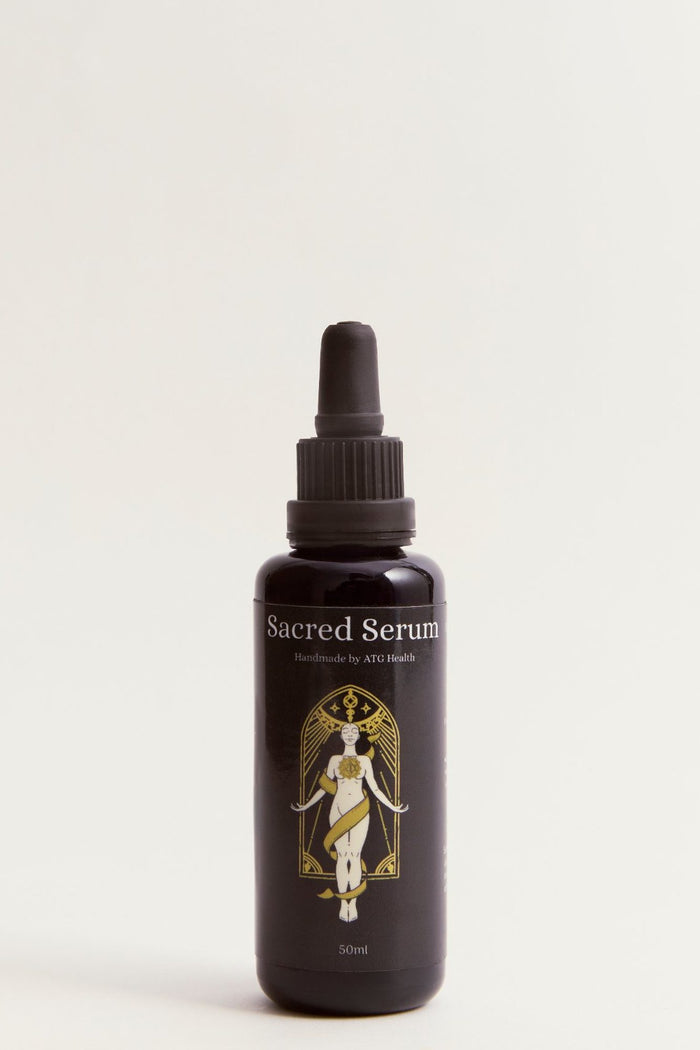
In Sacred Serum, we carry Australian native botanicals in jojoba, a liquid wax that closely resembles the skin's own oils, and ozonated macadamia, native to south-east Queensland and naturally rich in palmitoleic acid.

Together, these oils offer something no single ingredient can provide alone: a deliberately constructed lipid ecosystem.
Where You'll Find This Lipid Architecture
Healers' Balms: the everyday foundation
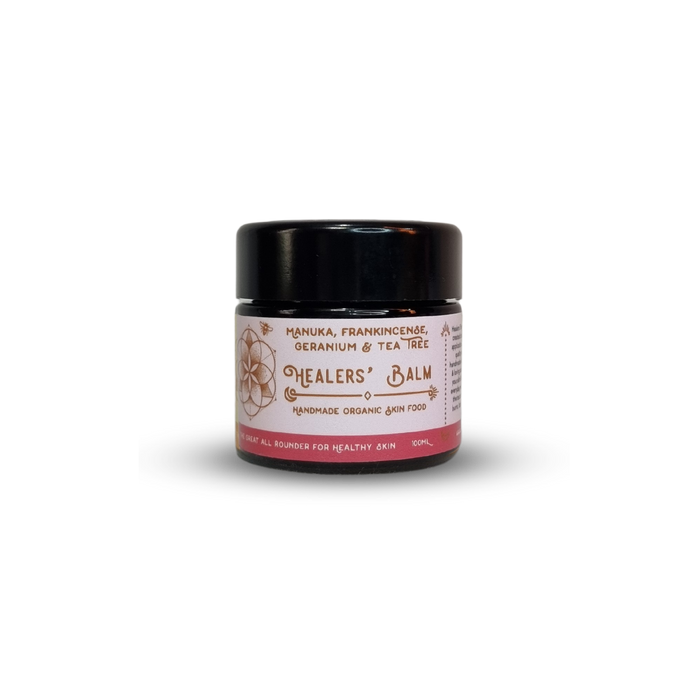
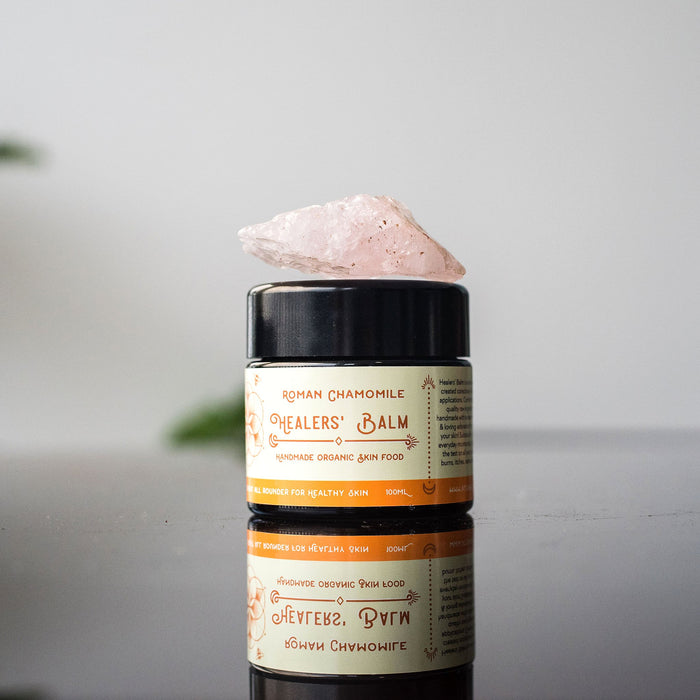
Cold-pressed organic coconut and olive oils with beeswax and vitamin E, carrying a single family of essential oils. Roman Chamomile is our softest, made for dry and sensitive skin at every age. Frankincense, Geranium & Tea Tree is the all-rounder for face, body and everything in between.
Zinc Balms: for days outdoors
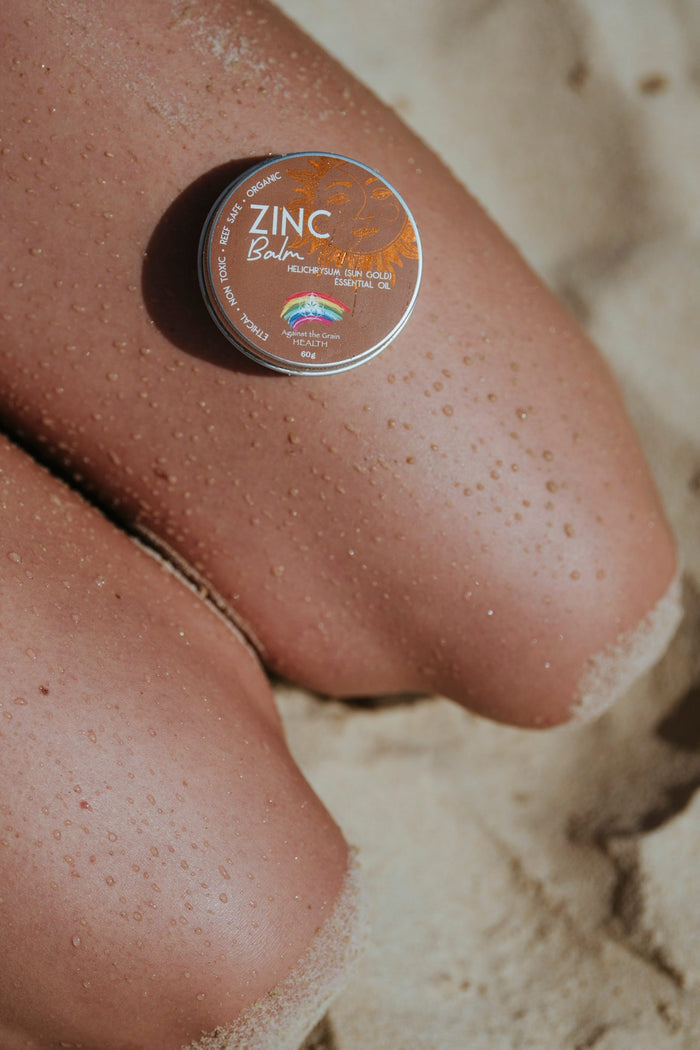
The same coconut and olive base, with non-nano zinc oxide and organic cocoa for a natural tint that settles to your skin tone. Our Zinc Balm Helichrysum shares its golden flower with Sun Gold.


Sun Gold: the fullest expression
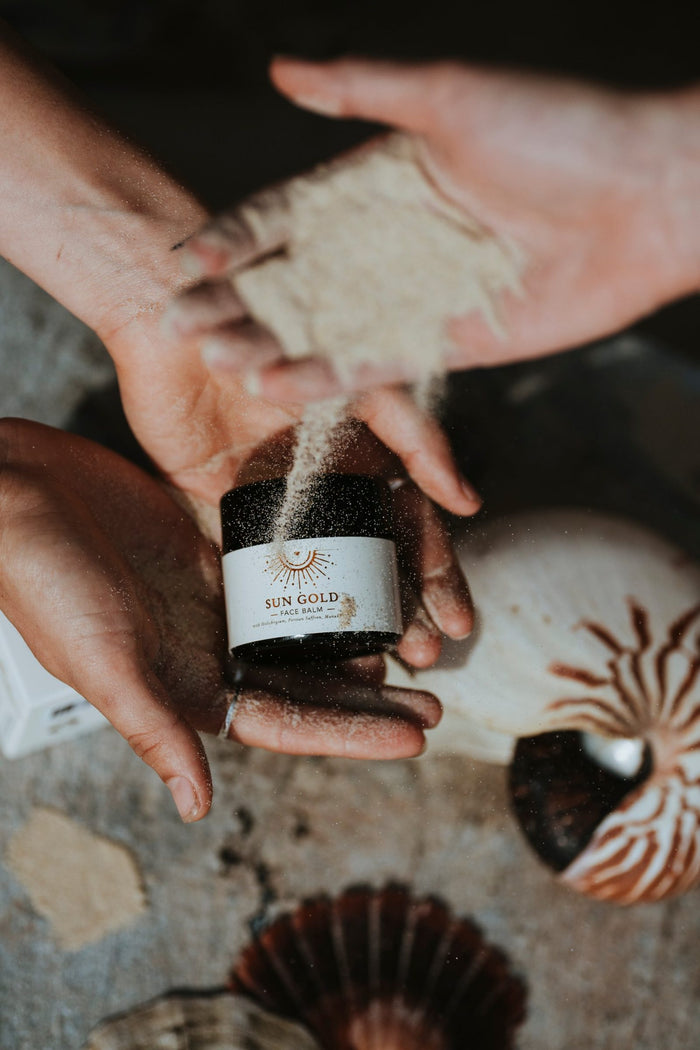
Tasmanian hemp seed oil, saffron-infused almond oil and manuka beeswax, with helichrysum and Carbon 60. This is the formulation where the lipid architecture is most considered, built for skin that spends its life beneath the sun.
Sacred Serum: concentrated and fluid
Jojoba and ozonated macadamia carrying Kakadu plum, native sandalwood, blue cypress and rose mahogany. Lovely on its own, or pressed in beneath a balm.


Featured in this story
Sun Gold
Golden botanical nourishment for skin that's lived beneath the sun. Hemp seed and saffron-infused almond oils with helichrysum, Persian saffron and Carbon 60.
How to Layer Plant-Oil Skincare
- Start fluid: press 3–4 drops of Sacred Serum into clean, slightly damp skin.
- Seal with a balm: warm a small amount of Sun Gold or a Healers' Balm between your fingertips until it melts, then press it in.
- Heading outside: blend a little Zinc Balm with Sun Gold for a tinted, nourishing finish.
- Slow it down: a few unhurried breaths while you apply. The ritual is part of the nourishment.
Store balms somewhere cool and away from direct sun. Natural beeswax balms soften in heat and set again without any loss of quality. If your skin is sensitive, try a little on the inner arm first.
So, Is Tallow Better or Worse?
Neither. It comes down to sourcing, and which brand you're trusting to do that with integrity on your behalf.
It's up to us as consumers to consider the difficult questions. It's up to skincare makers to meet them in a place that honours the experience they're seeking.
Whatever you put on your skin, ask where it came from.
Then ask again.
Final Thoughts
For us, the question has never been which single fat is best. It's what combination of fatty acids, botanical compounds and thoughtful sourcing creates a formulation we can stand behind, from soil to skin.
If you have questions about any of our ingredients, where they come from or which balm might suit your skin, get in touch with us. We love these conversations.
Frequently Asked Questions
Is tallow good for your skin?
Tallow is a traditional, nourishing fat that many people enjoy. Like any ingredient, its quality depends on the animal it came from, how that animal was raised and how the fat was rendered. If you use tallow, ask your maker about its provenance.
Why doesn't Against The Grain use tallow?
We choose plant oils because we can trace them, grower by grower and batch by batch, and because blending several oils gives a broader spectrum of fatty acids and botanical compounds than any single fat. It's a choice about provenance and formulation, not a judgement of tallow.
What is lipid architecture?
It's the way we describe a formulation built from several oils chosen for their different fatty acids and natural compounds, so the blend offers more than any one oil could alone.
Are your products vegan?
Our oils are all plant-based, but our balms contain beeswax, so they aren't vegan. Sacred Serum is made without beeswax.
Which plant oil is closest to the skin's own oils?
Jojoba is often described this way, as it's a liquid wax with a structure similar to the wax esters in human sebum. Linoleic-rich oils like hemp seed are valued for their link to the skin's barrier lipids.
What does cold-pressed mean?
Cold-pressed oils are extracted mechanically at low temperatures, without solvents or high-heat refining. This helps the oil keep more of its natural vitamin E, plant sterols and polyphenols.
Further reading
- Lin, Zhong & Santiago (2017). Anti-inflammatory and skin barrier repair effects of topical application of some plant oils. International Journal of Molecular Sciences.
- Elias, Brown & Ziboh (1980). The permeability barrier in essential fatty acid deficiency: evidence for a direct role for linoleic acid in barrier function. Journal of Investigative Dermatology.
Against The Grain
Handmade on the Sunshine Coast.
Before You Go…
Here are a few handpicked articles to inspire your next self-care moment.