Molecular Hydrogen Explained: The Science of H₂ and Your Cells
Molecular hydrogen (H₂) is the smallest molecule in nature, a free gas made of two hydrogen atoms. It is small enough to pass through the body's membranes and into our cells, which is why researchers around the world are exploring how it interacts with oxidative stress and the body's own signalling systems.
In this piece we explore what molecular hydrogen is, what the research does and doesn't show, and how it sits behind three of our Beneficial Technologies: the Molecular Hydrogen Breathing System, the MultiStage Benchtop Water Filter and the Hydrogen Water Bottle.
In short
Every cell makes reactive oxygen species as part of normal life. Too many, and we call it oxidative stress. Molecular hydrogen can reach deep inside our cells, and research suggests it may help the body manage that balance, partly by reacting with the most damaging oxidants and partly by influencing the body's own protective pathways. It's a genuinely active field, and still unfolding.
What Is Molecular Hydrogen?
Hydrogen is the simplest and most abundant element in the universe. When two hydrogen atoms join, they form molecular hydrogen, or H₂. Unlike the hydrogen chemically bound within water (H₂O), molecular hydrogen is a free gas: colourless, odourless and extremely small.
That small size is what makes it interesting. Cell membranes are made largely of lipids, and small, nonpolar molecules like H₂ can pass straight through them. Hydrogen can reach deep into our tissues, including the mitochondria, the structures that make much of the energy our cells run on.

What Is Oxidative Stress?
Every cell produces reactive oxygen species (ROS) during normal metabolism, particularly within the mitochondria. They aren't the enemy. In controlled amounts they help regulate immune defence, cellular adaptation and communication.
Problems arise when reactive species build up faster than the body can regulate them. This is oxidative stress, and over time it can contribute to damage involving cell membranes, proteins and DNA.
How hydrogen may interact with oxidative stress
01
Reaches
H₂ diffuses through membranes into cells and mitochondria.
02
Reacts
Early research found it selectively reduces the most damaging oxidant, the hydroxyl radical.
03
Regulates
Newer research explores its influence on the body's own antioxidant and inflammatory pathways.
How Might Hydrogen Work in the Body?
Direct chemical interactions
The modern field began in 2007, when researchers found that H₂ selectively reduced the hydroxyl radical, the most damaging reactive oxygen species, in cell and animal models, while leaving other reactive species that have useful roles untouched.1 Whether this direct effect explains hydrogen's influence at the low concentrations reached in human tissues is still debated.
Indirect regulation of cellular signalling
More recent research explores how hydrogen may influence the body's own regulatory systems. These include Nrf2, a pathway that switches on our protective antioxidant enzymes, and NF-κB, a signalling system involved in inflammation and immune responses.
Not a substance that wipes out every free radical,
but one that may help the body keep its own balance.
What Do the Studies Show?
A growing body of research has explored hydrogen-rich water. Three human studies are often referenced. Each is worth reading with its limits in mind.
20
people · rheumatoid arthritis
10
elite athletes · muscle fatigue
36
people · glucose & cholesterol
Inflammation
People with rheumatoid arthritis drank 530 mL of water containing 4–5 ppm hydrogen daily over two four-week periods. Researchers reported reduced markers of oxidative DNA damage and lower disease activity.2 It was a small, open-label pilot without a placebo group, so it can't show that hydrogen water treats the condition.
Exercise
In a double-blind crossover pilot with ten elite soccer players, hydrogen-rich water taken before strenuous exercise prevented the rise in blood lactate and reduced the early decline in muscle strength. The measured oxidative markers didn't change significantly.3 The hydrogen water in this study was made with magnesium sticks rather than electrolysis.
Metabolic health
In a double-blind crossover study of 36 people with type 2 diabetes or impaired glucose tolerance, eight weeks of hydrogen-rich water was associated with improvements in selected cholesterol and glucose markers.4 These are preliminary findings, not evidence that hydrogen water prevents or treats diabetes.
None of these studies tested a Hydrogen Health device. Each delivered hydrogen in its own way and at its own concentration. Research has also explored brain health, mood, skin, liver and heart health, much of it in laboratory and animal models.
Breathing Hydrogen or Drinking It?
Inhalation
With the Breathing System, hydrogen crosses the lungs' gas-exchange surfaces into circulation, distributes through the tissues and is mostly breathed back out.
Drinking
With the Benchtop Filter and Water Bottle, dissolved H₂ is absorbed through the digestive tract and carried in the blood. Many human studies use hydrogen-rich water, and the ideal amount for either method is still being worked out.

Featured in this story
Molecular Hydrogen Breathing System
A portable system that produces pure molecular hydrogen from distilled water, delivered through a soft nasal cannula.
Is Hydrogen Water More Hydrating?
Hydration and hydrogen are two different things. Hydration is the body's water balance. Hydrogen is the dissolved gas being studied for its effects on oxidative stress. Drinking hydrogen water gives you both, but there isn't good evidence that it hydrates better than the same amount of ordinary water.
The same care applies to other water terms. Water with dissolved hydrogen has a negative ORP (oxidation-reduction potential), a real and measurable property, but ORP doesn't directly measure antioxidant activity in the body. And the body keeps blood pH within a tight range, so alkaline water doesn't meaningfully change it in healthy people. The science worth paying attention to is the dissolved hydrogen itself.
How Much Hydrogen Is in Hydrogen Water?
At normal pressure and room temperature, water holds around 1.6 mg of hydrogen per litre at equilibrium (about 1,600 ppb). Freshly made hydrogen water can briefly hold more, which is why it's best enjoyed straight away. Our Water Bottle is advertised by Hydrogen Health at up to 5,500+ ppb, and we've asked them for independent testing that shows the method and how long the level lasts.

Featured in this story
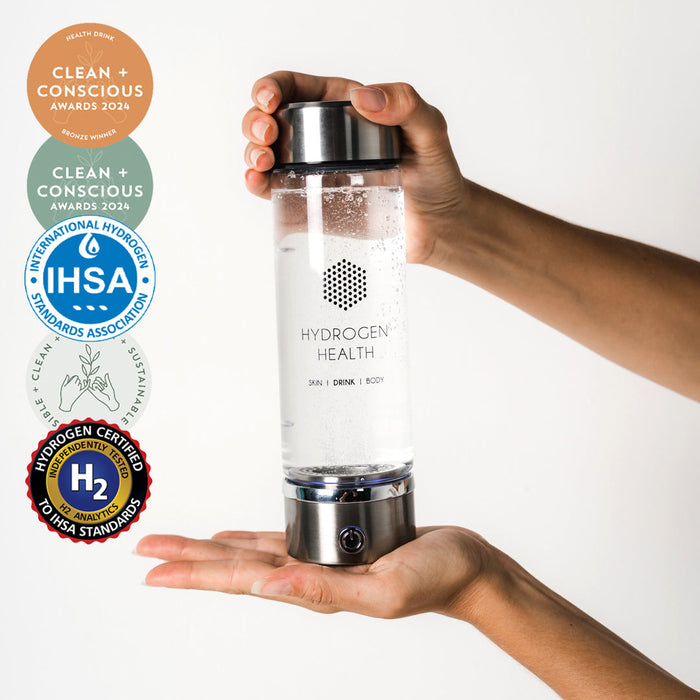
Hydrogen Water Bottle
Fill, press, and in about three minutes everyday water becomes hydrogen-rich water. Filtered, remineralised and made to carry.
How to Bring Molecular Hydrogen Into Your Day
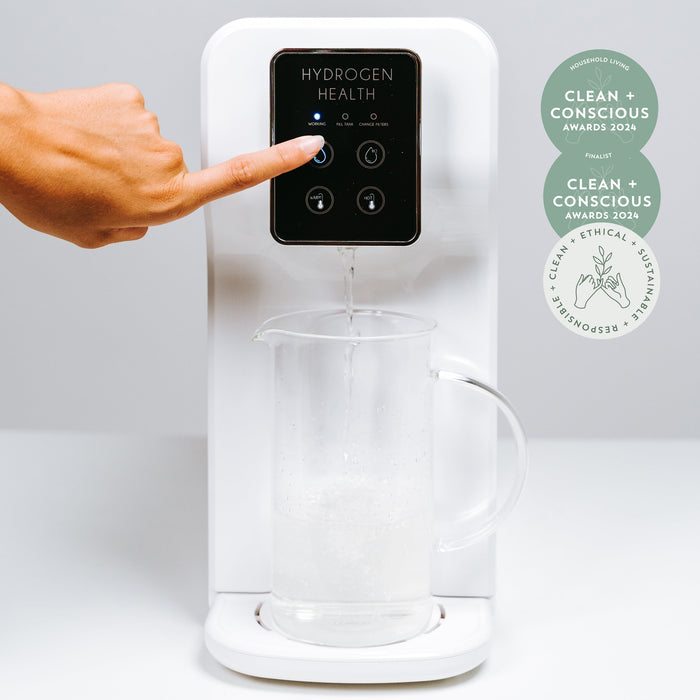
- At home: the MultiStage Benchtop Filter filters your drinking water and enriches it with hydrogen, with no plumbing.
- On the go: the Hydrogen Water Bottle makes a fresh glass in about three minutes.
- As a ritual: the Breathing System pairs hydrogen with 30 to 60 minutes of rest, reading or meditation.
- Drink it fresh: hydrogen gradually escapes from water, so pour and drink rather than storing it.
Final Thoughts
Molecular hydrogen combines a tiny size, rapid diffusion and a possible influence on cellular signalling. It's a genuinely active area of biomedical research, although the ideal dose, long-term benefits and clinical uses are still being explored.
For us, the most compelling part of the story is the relationship between oxidative stress, cellular adaptation and this emerging science. We share it with curiosity rather than as a promise.
If you'd like to talk through which technology suits you, get in touch with us. We're always happy to talk.
Frequently Asked Questions
What is molecular hydrogen?
Molecular hydrogen (H₂) is a free gas made of two hydrogen atoms. It's the smallest molecule in nature, colourless and odourless, and different from the hydrogen bound inside water (H₂O).
Is hydrogen water an antioxidant?
Early research found H₂ selectively reduces the hydroxyl radical, one of the most damaging oxidants. Newer research suggests it may also work indirectly, by influencing the body's own antioxidant and inflammatory pathways. Both ideas are still being studied in people.
Is it better to breathe or drink molecular hydrogen?
They are different routes. Inhalation delivers hydrogen through the lungs; drinking delivers it through the digestive tract. Much of the human research uses hydrogen-rich water, and the ideal dose for either is still being explored.
How long does hydrogen stay in water?
Hydrogen gradually escapes from water once it's made, so it's best to drink hydrogen water fresh rather than storing it.
Is hydrogen water alkaline water?
Not necessarily. Researchers have shown the effects studied come from the dissolved hydrogen, not from alkalinity, and drinking alkaline water doesn't meaningfully change blood pH in healthy people.
Have Hydrogen Health's products been clinically tested?
The studies referenced in this article used hydrogen-rich water made in their own ways and at set concentrations. They weren't studies of a particular device. We've asked Hydrogen Health for independent testing of their products' hydrogen output.
References
- Ohsawa I, et al. (2007). Hydrogen acts as a therapeutic antioxidant by selectively reducing cytotoxic oxygen radicals. Nature Medicine 13(6):688–694.
- Ishibashi T, et al. (2012). Consumption of water containing a high concentration of molecular hydrogen reduces oxidative stress and disease activity in patients with rheumatoid arthritis: an open-label pilot study. Medical Gas Research 2:27.
- Aoki K, et al. (2012). Pilot study: Effects of drinking hydrogen-rich water on muscle fatigue caused by acute exercise in elite athletes. Medical Gas Research 2:12.
- Kajiyama S, et al. (2008). Supplementation of hydrogen-rich water improves lipid and glucose metabolism in patients with type 2 diabetes or impaired glucose tolerance. Nutrition Research 28(3):137–143.
Against The Grain
Handmade on the Sunshine Coast.
Before You Go…
Here are a few handpicked articles to inspire your next self-care moment.