Shower & Water Filters: Chlorine, Vitamin C and Your Skin
Good water begins with what we remove. Filtration reduces substances we'd rather not drink, and treating shower water reduces the chlorine that meets our skin every day. Both draw on well-established water chemistry, and both are simple ways to be more considered about the water in our lives.
In this piece we explore how filtration works, how vitamin C neutralises chlorine, why the skin barrier matters, and how it all comes together in our MultiStage Benchtop Water Filter and Shower Filter.
In short
Different contaminants need different treatments, so good filters combine several stages. In the shower, vitamin C converts chlorine into chloride, a well-understood reaction. Cleaner water on the skin is a natural first step before the oils and waxes we use to support its lipid barrier.
Why Think About the Water We Drink?
Water carries cellular chemistry, nutrients, heat and waste through the body. What's in it depends on its source, its minerals, the chemicals used to treat it and the pipes it travels through. Water is more than H₂O.

How Does Multi-Stage Filtration Work?
Different contaminants need different treatments, so a multi-stage filter combines several.
Three ways water is treated
01
Physical
Fine filtration captures sediment and particles.
02
Adsorption
Activated carbon's porous surface holds chlorine and organic compounds.
03
Specialised media
Ion exchange and targeted adsorbents can reduce certain metals and other ions.
Activated carbon
One of the most widely used materials in drinking-water treatment. Its highly porous structure has an enormous internal surface that attracts and holds certain dissolved organic compounds, and it's particularly good at reducing chlorine taste and odour.
Specialised media
Ion exchange, ceramics and targeted adsorbents can reduce substances carbon doesn't reliably remove, such as certain heavy metals, fluoride or PFAS. We've asked Hydrogen Health to confirm the exact stages in the Benchtop Filter.

Featured in this story
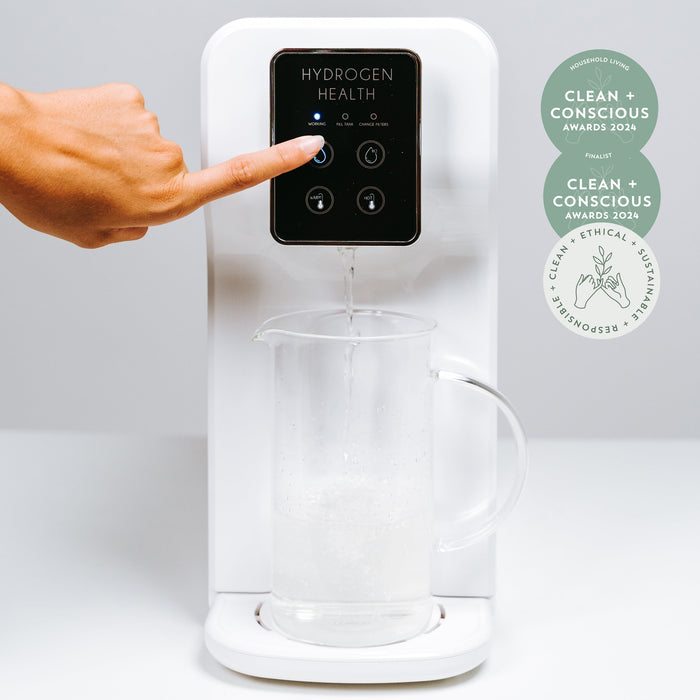
MultiStage Benchtop Hydrogen Water Filter
A considered approach to the water we drink. Multi-stage filtration and hydrogen enrichment on your kitchen bench, with no plumbing required.
Does Chlorine in Shower Water Affect Your Skin?
Chlorine keeps municipal water microbiologically safe. In water it exists as hypochlorous acid and hypochlorite, both oxidising agents, which is exactly why they work against microbes. At regulated levels it's considered safe to drink, but some people find chlorinated water irritating, especially when their skin is already dry or sensitive.
Your skin's outer layer, the stratum corneum, is made of specialised cells set in a lipid-rich matrix that holds moisture in. That barrier depends on a balance of lipids, proteins, moisture and surface pH, and hot water, detergents and some chemicals can wear at it.
Healthy skin begins
with a healthy barrier.
How Does Vitamin C Remove Chlorine?
Vitamin C (ascorbic acid) is a reducing agent. It reacts with hypochlorous acid and converts it into chloride, which doesn't share chlorine's oxidising activity. It's well-understood chemistry and a practical way to dechlorinate water.
In a shower, water passes through quickly, so performance depends on contact time, flow, temperature and how much active material remains. That's why cartridges are replaced every 9 to 10 months.

Do Minerals Soften Water?
Not on their own. Adding minerals can change water's pH and ionic make-up, but softening means removing hardness ions such as calcium and magnesium. Magnetic water treatment has been studied for scale in industrial settings with mixed results, and its benefits for skin are less established than chlorine reduction.
What Does the Research Support?
- Well established: reducing agents such as vitamin C neutralise chlorine, and protecting the skin barrier from repeated irritation matters.
- Mixed: studies link hard water with eczema, but evidence that household water treatment improves established eczema is mixed.
- Less established: biological benefits from mineral infusion and magnetic structuring.

Featured in this story
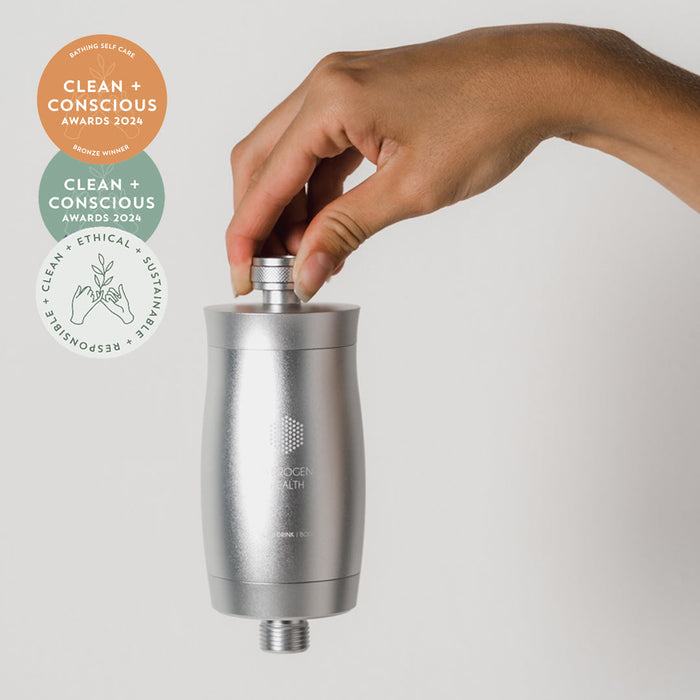
Shower Filter
Rethinking the water we bathe in. Reduces chlorine, heavy metals and other impurities at the shower head, with vitamin C and minerals. In Silver, Black or Brass.
How to Make Your Water More Considered
- Start with drinking water: filter what you drink every day, at the tap or on the bench.
- Then the shower: a shower filter treats the water that meets your skin and hair.
- Replace on time: filters work only while their media is active, so keep track of cartridge dates.
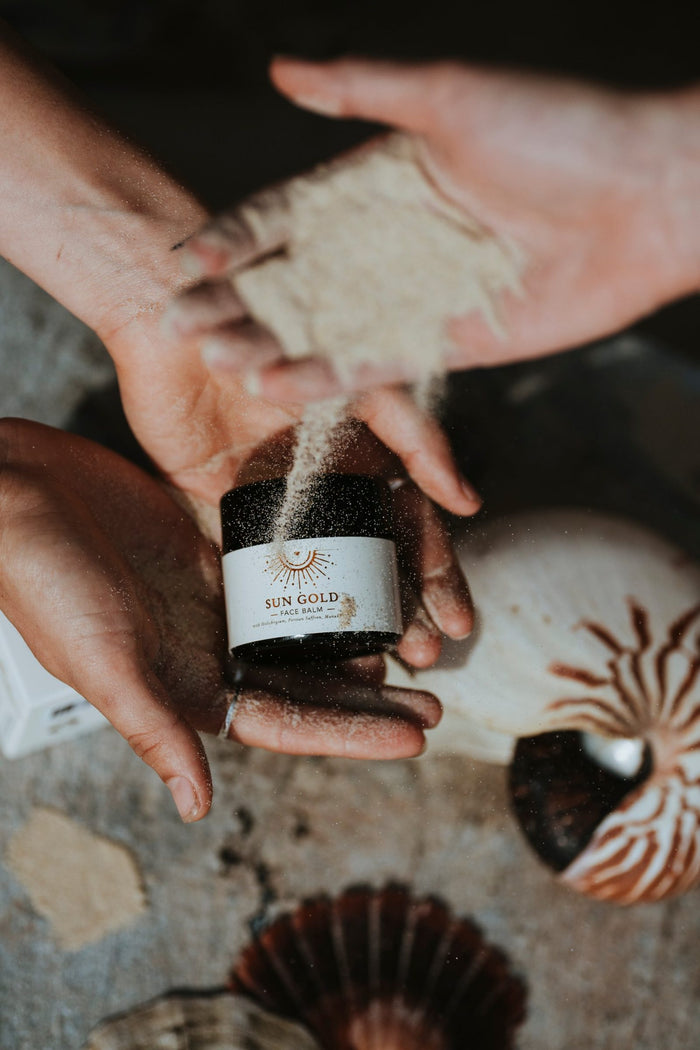
- Finish with nourishment: after a shower, seal in moisture with a balm such as Sun Gold.
Final Thoughts
Good water doesn't need to be complicated. It begins with what we remove, before we think about what we add.
Our skin care is built around supporting the skin's natural lipid environment with botanical oils and waxes. Considering the water that reaches your skin first is a natural extension of that: skin care that starts before the balm.
If you have questions about your water or which filter suits your home, get in touch with us.
Frequently Asked Questions
Does a shower filter remove chlorine?
A shower filter with vitamin C or suitable redox media converts chlorine into chloride. How much it removes depends on flow, temperature and how fresh the cartridge is.
How does vitamin C dechlorinate water?
Vitamin C is a reducing agent. It reacts with hypochlorous acid, the main form of chlorine in water, and converts it into chloride.
What does activated carbon filter out?
Activated carbon is especially good at reducing chlorine taste and odour and certain organic compounds. Other media are needed for some metals and ions.
Does the Shower Filter make hydrogen water?
No. It filters and conditions water. Our Hydrogen Water Bottle and Benchtop Filter are the products that add molecular hydrogen.
How often should I replace my shower filter cartridge?
Hydrogen Health rates the cartridge for up to 12 months and recommends replacing it every 9 to 10 months for best results.
Against The Grain
Handmade on the Sunshine Coast.
Before You Go…
Here are a few handpicked articles to inspire your next self-care moment.